You can easily find plastic melting points in the chart below:
Polypropylene melts at 130-170°C. It is used in injection molding.
Low-density polyethylene melts at 115-135°C. It works well for packaging.
Nylon melts at 220-260°C. It is good for car parts near engines.
Teflon melts at 327°C. It is great for high-heat uses.
Knowing the melting point helps you pick the right material. This is useful for making things, recycling, or crafting.
Key Takeaways
It is important to know melting points of plastics. This helps you pick the right material for your project.
The chart lets you find melting points fast for common plastics.
When recycling, sort plastics by melting point. This keeps things safe and makes recycling work better.
Always wear safety gear when heating plastics. This protects you from bad fumes.
Check the melting point before you start crafting. This stops you from burning or ruining the plastic.
Different plastics have special properties. Pick the one that fits your project best.
Keep a printed melting point chart close by. This helps you find information quickly during your project.
Quick Reference Chart: Plastic Melting Points
Common Plastics Overview
You use different plastics every day. Each one melts at a certain temperature. This is called the melting point. It tells you when the plastic turns into a liquid. If you know the melting point, you can pick the right plastic for your project. Some plastics melt with little heat. Others need a lot more heat to melt.
Plastics are in two main groups. Thermoplastics melt and can be shaped again and again. Thermosets do not melt after they set. Most plastics you use are thermoplastics. These are polyethylene (PE), polypropylene (PP), polyvinyl chloride (PVC), polystyrene (PS), polyethylene terephthalate (PET), acrylonitrile butadiene styrene (ABS), nylon, and polycarbonate (PC). PTFE, or Teflon, is a special plastic. It melts at a much higher temperature.
Here is a chart that shows the melting points for common plastics:
Material | Melting Point Range (℃) |
Polyethylene (PE) - LDPE | 105-115 |
Polyethylene (PE) - HDPE | 130-135 |
Polypropylene (PP) | 160-170 |
Polyvinyl Chloride (PVC) | 75-85 |
Polystyrene (PS) | 240-250 |
Polyethylene Terephthalate (PET) | 245-255 |
Acrylonitrile Butadiene Styrene (ABS) | 105-115 |
Nylon 6 (Polyamide) | 215-225 |
Polycarbonate (PC) | 220-230 |
Polytetrafluoroethylene (PTFE) | 327 |
You can see how the melting points are different in this chart:
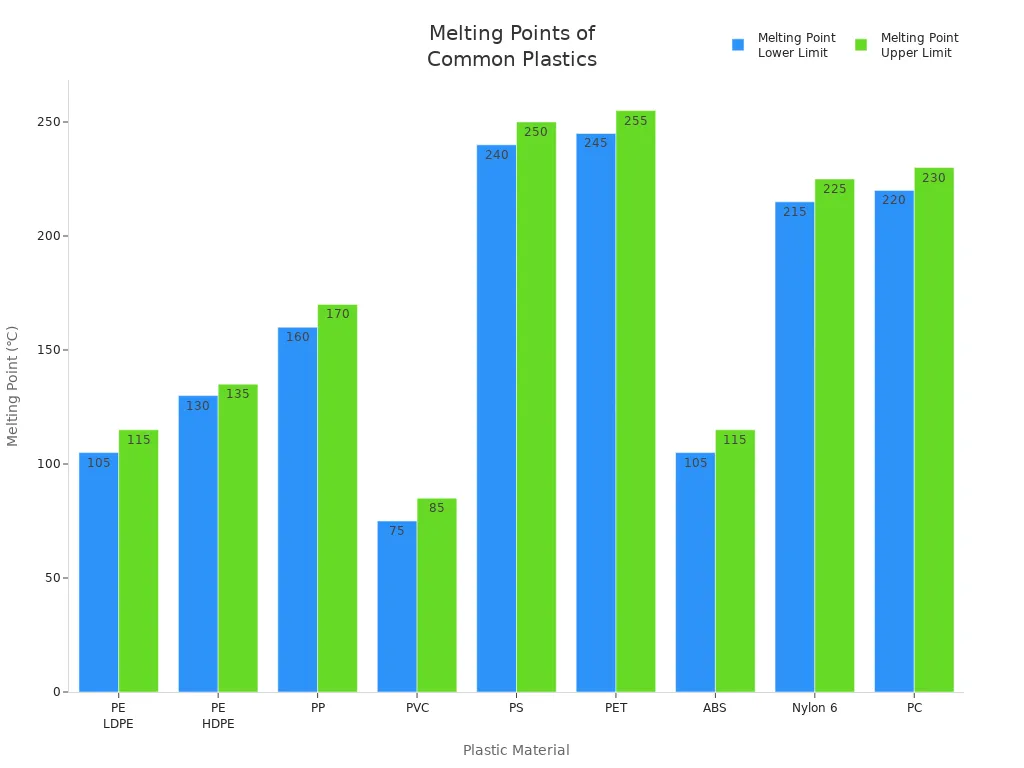
Tip: Thermoplastics like PE and PP melt at one temperature. Amorphous plastics like ABS and PC get soft over a range of temperatures. This changes how you heat and shape them.
How to Use the Chart
This chart is a quick way to check plastic melting points for your projects. If you need to choose a plastic for making things, look at the melting point. Pick one that matches your process. For injection molding, use a plastic that melts at a temperature your machine can reach. If you recycle plastics, sort them by melting point. This stops you from mixing plastics that melt at different heats.
When you craft or fix things at home, check the chart before you use heat. This keeps you from burning or ruining the plastic. The chart helps you set the right temperature for melting and molding each plastic. You can make better choices and get good results.
Note: Always wear safety gear when you heat plastics. Some plastics can make fumes if they get too hot.
Keep this chart close by. It helps you pick the right plastic and use it the right way. This saves you time and helps you avoid mistakes when working with plastic melting points.
Plastic Melting Temperature Tables by Type
Polyethylene (PE)
Polyethylene is a plastic you see a lot. There are two main types: LDPE and HDPE. Each type melts at a different temperature. They also need different ways to be shaped. LDPE is in plastic bags and wraps. HDPE is used for bottles and pipes. If you know the melting temperature, you can pick the right plastic for your project.
LDPE Melting Point
LDPE melts at a lower temperature than HDPE. You can shape LDPE easily because it gets soft fast. Here is a table that shows the melting point and other temperatures:
Type | Melting Point (°C) | Melting Point (°F) | Injection Molding Temp (°C) | Decomposition Temp (°C) |
LDPE | 115 | 239 | 150-230 | 300 |
LDPE is good for things that need to bend. Do not heat LDPE above 300°C or it will break down.
HDPE Melting Point
HDPE melts at a higher temperature than LDPE. It is stronger and harder. You use HDPE for things like containers and pipes that need to be tough. Here is a table for HDPE:
Type | Melting Point (°C) | Melting Point (°F) | Injection Molding Temp (°C) | Decomposition Temp (°C) |
HDPE | 135 | 275 | 160-280 | 300 |
You must watch the heat closely when using HDPE.
Polypropylene (PP)
Polypropylene is another plastic people use a lot. You find it in food containers, car parts, and fabrics. The melting point for PP is between 160°C and 170°C. You should keep the heat in this range for the best results. Here is a table with the melt and mold temperatures for PP:
Material Name | Melting Temperature (°C) | Injection Molding Temperature (°C) | Decomposition Temperature (°C) |
PP | 160-175 | 190-290 | 320 |
If you use these temperatures, PP flows well and looks good.
Polyvinyl Chloride (PVC)
PVC comes in different types. Rigid PVC is used for pipes and window frames. Flexible PVC is in wires and medical tools. Chlorinated PVC is for hot water pipes. Here is a table that shows the melting temperature for each type:
PVC Type | Melting point range (°C) | Main application areas |
Rigid PVC (RPVC) | 170–212 | Building pipes, window frames, automotive |
Flexible PVC (FPVC) | 160–190 | Wires, cables, medical equipment |
Chlorinated PVC | 230–260 | Hot water pipes, chemical pipelines |
You need to control the heat when working with PVC. If you heat PVC too much, it can make dangerous gases. Always use good airflow and wear safety gear.
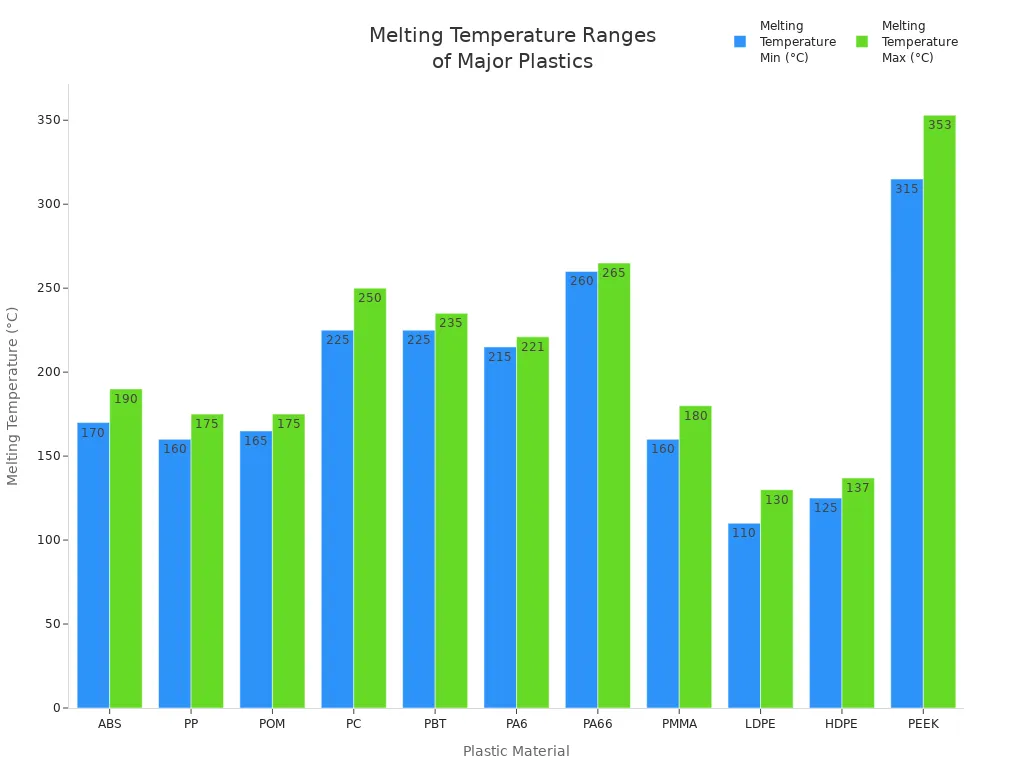
Tip: Use these tables to find the right temperature for each plastic. This helps you avoid mistakes and get the best results.
Polyethylene Terephthalate (PET)
You see PET in water bottles, food packaging, and clothing fibers. PET has a melting point range of 255–265°C (491°F–509°F). This high melting point gives PET strong dimensional stability. You can use PET in places that get warm without worrying about it losing shape or strength. When you recycle PET, the high melting point helps you melt and mold it again with little loss in quality. This makes PET a favorite for recycling programs.
Melting point range: 255–265°C
PET stays strong when heated
You can recycle PET many times
Tip: Always check the plastic melting temperature before recycling or molding PET. This helps you avoid overheating and keeps your products safe.
Acrylonitrile Butadiene Styrene (ABS)
ABS is a tough plastic. You find it in car parts, electronics, and plumbing. The melting point of plastic for ABS sits between 220°C and 250°C. ABS handles heat well, so you can use it for things that need to stay strong and not crack. You can see common uses and melt and mold temperatures in the table below:
Melting Point Range (°C) | Common Applications |
220–250 | Automotive parts, electronics housings, plumbing components, functional prototypes |
ABS works well for making prototypes and parts that need to last. You can shape ABS easily if you keep the heat in the right range. This gives you smooth surfaces and fewer defects.
Note: ABS can release fumes if overheated. Always use good ventilation and safety gear.
Nylon (Polyamide)
Nylon is a strong plastic used in engineering. You see nylon in gears, bushings, and car parts. Nylon comes in many types, each with a different melting point. The table below shows the melting points for common nylon types:
Nylon Type | Melting Point (°C) |
Nylon 6 | 220 |
Nylon 66 | 260 |
Nylon 12 | 178 |
Nylon 11 | 188 |
Nylon 6/12 | 200–220 |
Nylon 6-10 | 245 |
Nylon 46 | 295 |
Nylon 610 | 220 |
Nylon 12,12 | 190–200 |
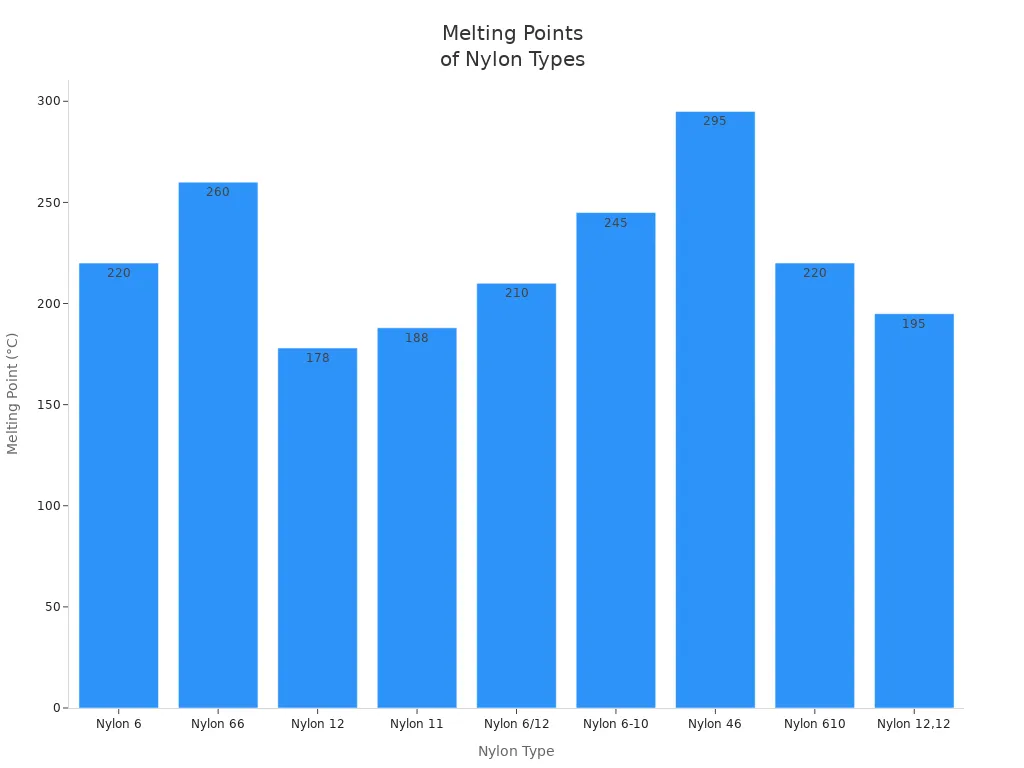
Nylon 66 melts at 260°C. You use it for car parts that get hot. Nylon 12 melts at 178°C. It works well for flexible parts and those that need chemical resistance. You pick the right nylon type by checking the melt and mold temperatures.
Tip: Always match the nylon type to your project’s heat needs. This helps you avoid warping and keeps your parts strong.
Polystyrene (PS)
You find polystyrene in foam cups and food boxes. It is also in CD cases. This plastic is clear and hard. Sometimes, it is made into foam. Polystyrene changes at different temperatures. You need to know these before you heat or shape it.
Here is a table that lists the main thermal properties of polystyrene:
Thermal Property | Temperature Range (°C) | Temperature Range (°F) | Physical State Change |
Glass Transition Temperature (Tg) | ~100 | ~212 | Rigid to rubbery transition |
Softening Point | ~80-100 | ~176-212 | Begins to deform under load |
Melting Point Range | 240-260 | 464-500 | Transitions to a viscous liquid |
Decomposition Temperature | >270 | >518 | Chemical breakdown begins |
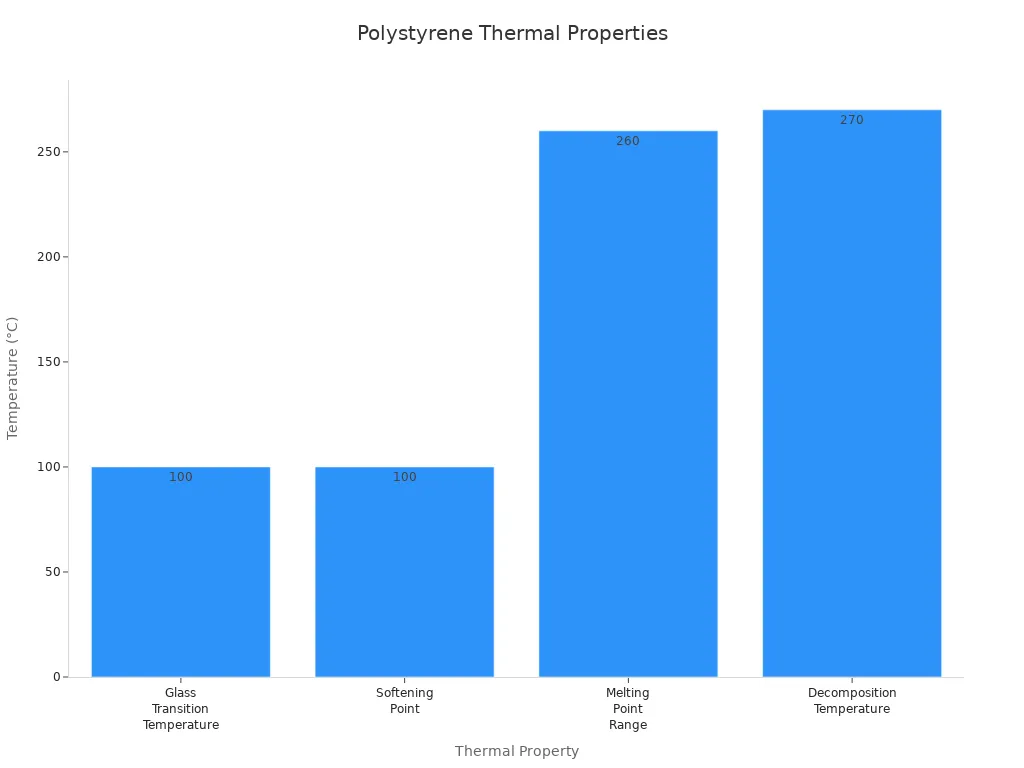
Heat polystyrene slowly for best results. It starts to get soft at about 80°C. It melts between 240°C and 260°C. If you heat it over 270°C, it can break down and make fumes. Always use good airflow and wear safety gear.
Polycarbonate (PC)
Polycarbonate is a strong and clear plastic. You see it in safety glasses and car parts. It is also in water bottles. Polycarbonate does not break easily. It can handle heat and impacts well.
Here is a table that compares polycarbonate with other plastics:
Material | Melting Point / Range (°C) | Key Properties | Common Applications |
Polycarbonate (PC) | 225–250 | Tough, transparent, heat resistant | Automotive parts, safety shields |
Acrylic (PMMA) | 130–160 | Clear, rigid, UV resistant | Light diffusers, display panels |
ABS | ~220 | Durable, easy to mold | Electronics, household items |
PET | 245–260 | Strong, chemical resistant | Containers, industrial films |
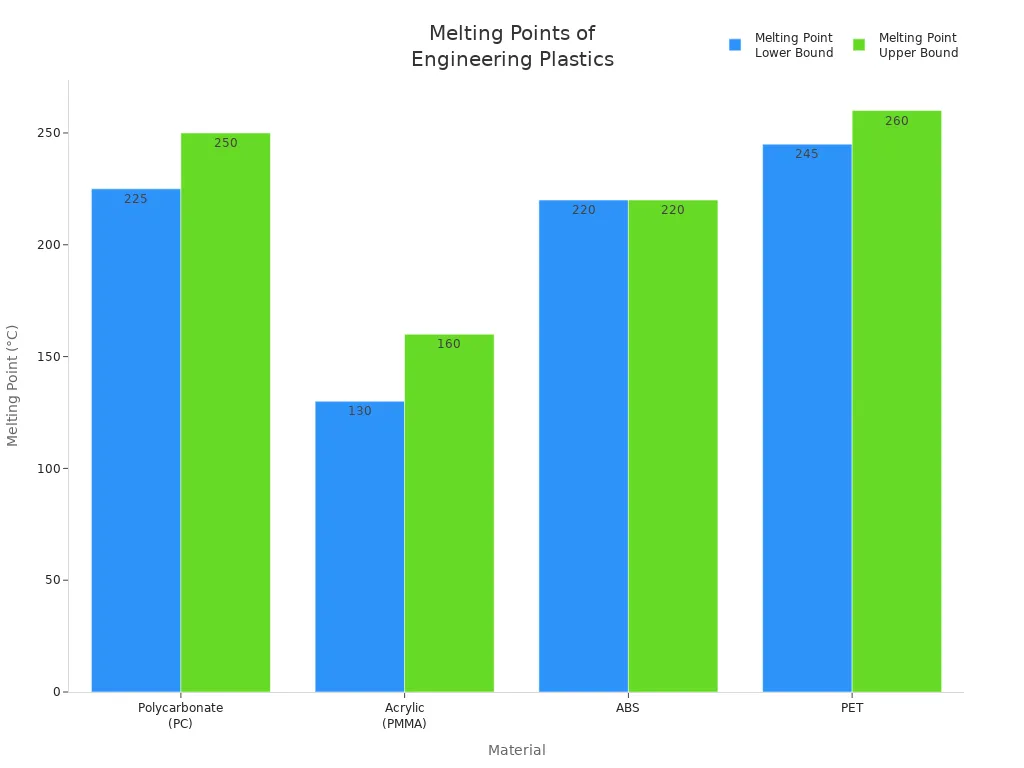
You should heat polycarbonate to 225–250°C to melt it. It stays strong even when hot. If you want to shape it, keep the heat in this range.
Note: Polycarbonate can burn if overheated. Always watch the temperature and use safety tools.
Polytetrafluoroethylene (PTFE)
PTFE is also called Teflon. You see it in non-stick pans and wire coatings. It is also used for seals. PTFE melts at a very high temperature. It needs special care when heated.
The melting point of PTFE is about 327°C (621°F).
PTFE can start to change shape at lower temperatures, even before it melts.
The heat deformation temperature is between 50–60°C (ISO R75 A method) or 130–140°C (B method).
PTFE works safely from -200°C up to 260°C.
PTFE stays stable and does not break down much between 204°C and 327°C.
PTFE is great for jobs that need high heat. You must control the temperature carefully. This keeps your products strong and safe.
Other Engineering Plastics
You use engineering plastics for special jobs. These plastics are strong and last a long time. They can handle heat, chemicals, and lots of use. You see them in gears, medical tools, and electronics. Here are three important types: Polyoxymethylene (POM), Polyetheretherketone (PEEK), and Polymethyl Methacrylate (PMMA).
Polyoxymethylene (POM)
Polyoxymethylene is also called acetal or Delrin. It is a tough plastic. People use POM for gears and moving parts. It stays smooth and strong. POM melts at a medium temperature. You can shape it without much trouble.
Property | Value |
Melting Point (°C) | 175–180 |
Melting Point (°F) | 347–356 |
Processing Temp (°C) | 190–230 |
Decomposition Temp (°C) | >250 |
You need to keep the heat steady when molding POM. This stops problems and keeps parts smooth. POM is good for things that need to move easily.
Tip: Always check the processing temperature for POM. This helps you make strong and smooth parts.
Polyetheretherketone (PEEK)
PEEK is a very strong plastic. You find PEEK in planes, medical parts, and electronics. It can take high heat and strong chemicals. PEEK melts at a much higher temperature than most plastics.
Property | Value |
Melting Point (°C) | 343 |
Melting Point (°F) | 649 |
Processing Temp (°C) | 360–400 |
Decomposition Temp (°C) | >450 |
You need special machines to shape PEEK. It stays strong even in tough places.
Note: PEEK needs careful heat control. Use thermal management solutions to protect your molds and parts.
Polymethyl Methacrylate (PMMA)
PMMA is also called acrylic. You see PMMA in windows, signs, and light covers. It is clear and hard. PMMA melts at a lower temperature than PEEK.
Property | Value |
Melting Point (°C) | 160 |
Melting Point (°F) | 320 |
Processing Temp (°C) | 180–250 |
Decomposition Temp (°C) | >260 |
You can shape PMMA for many uses. It gives a bright and clear finish. This stops bubbles and cracks.
Alert: PMMA can crack if you heat it too fast. Always use slow, steady heat for best results.
You pick engineering plastics for hard jobs. You check the melting points and processing temperatures.
Melting Points and Processing Temperatures: Application Guide
Choosing Plastics for Manufacturing
When you choose plastics for manufacturing, you need to think about more than just the look or cost. The melting points and processing temperatures of each plastic matter a lot. These numbers tell you how much heat you need to shape or mold the plastic. If you pick the wrong plastic, your product might not turn out right.
Here are some things you should consider:
The type of plastic: Thermoplastics melt and can be reshaped. Thermosetting plastics do not melt after they set.
The molecular weight and crystallinity: These affect how high or low the melting point is.
Plasticizers: These can make plastics softer and lower the softening temperature.
Environmental impact: Lower fusion points can save energy and make recycling easier.
Risk of overheating: If you go above the fusion temperature, the plastic can break down.
You should always check the melt and mold temperatures before starting your project. This helps you avoid mistakes and keeps your products strong.
Tip: Knowing the practical implications of melting point helps you pick the best plastic for your job.
Recycling and Sorting by Melting Point
You need to sort plastics by their melting points when you recycle them. This step makes recycling faster and safer. In recycling plants, workers use melt flow index testing to check how plastics melt and flow. This test helps sort plastics into groups. Each group melts at a different temperature.
For example, HDPE melts at 130-135°C. This lower melting point means you use less energy to recycle it. You save money and help the environment. Recycling HDPE also uses about 80% less energy than making new plastic. Rules in many countries say you must keep recycled plastics pure. Sorting by melting point helps you meet these rules and keeps the recycled plastic strong.
Note: Always check the melting points and processing temperatures before recycling. This keeps the process safe and the final product high quality.
Crafting and DIY Uses
If you like to craft or do DIY projects, you need to know about plastic melting points. This knowledge keeps you safe and helps your projects turn out well.
Always work in a space with good airflow.
Wear a mask to protect yourself from fumes.
Start with plastics that are easy to melt, like PP, HDPE, and PS.
You should always check the melting temperature before you start. If you use too much heat, you can burn the plastic. If you use too little, the plastic will not flow well. The type of plastic and the room temperature can change how the plastic melts. Additives in the plastic can also change the melting point.
When you melt plastics, the temperature affects how well the plastic flows. High temperatures make the plastic flow better, but too much heat can make it weak. Low temperatures make the plastic thick and hard to shape. Pick the right plastic for your project by checking the melting points and processing temperatures.
Always use safe tools and check the melting point chart before you start your project.
Safety and Quality Control
When you work with plastics at their melting points, safety and quality control matter a lot. You want your products to look good and last long. You also want to keep yourself and your team safe. Paying attention to temperature and process steps helps you reach these goals.
You should always check the temperature before you start. If you heat plastic too much, it can break down. This can cause discoloration, weak spots, or even dangerous fumes. If you do not heat it enough, the plastic may not flow or mold well. You can use a thermometer or a temperature sensor to watch the heat closely.
Here is a table that shows important safety protocols and why they matter:
Safety Protocols | Description |
Temperature Control | Keeping the right melting temperature helps plastics stay strong and accurate. |
Preventing Thermal Degradation | Do not go above the melting point. This stops the plastic from breaking down and losing color or strength. |
Improving Production Efficiency | Using the right temperature saves energy and reduces waste. This gives you better products and less scrap. |
You should always wear safety gear. Use gloves, goggles, and a mask. Some plastics can make fumes when heated. Good airflow in your workspace helps keep the air clean. You should never touch hot plastic or tools with bare hands.
Quality control means checking your products at every step. Look for smooth surfaces, even color, and the right shape. If you see bubbles, burns, or warping, check your temperature settings. Small changes in heat can make a big difference.
Tip: Always keep a log of your temperature settings and results. This helps you find problems fast and improve your process.
You should train everyone who works with plastics. Show them how to use tools and safety gear. Teach them how to spot problems early. Good training keeps your team safe and your products high quality.
If you follow these steps, you can make strong, safe, and good-looking plastic products. You also protect yourself and your team from harm.
Plastic Melting Points Comparison Table
Popular Plastics Side-by-Side
Sometimes you need to compare plastics fast. A table lets you see melting points quickly. This helps you pick the right plastic for your project. You can use this table if you work in a factory, recycle, or do crafts at home.
Plastic Type | Melting Point (°C) | Melting Point (°F) | Common Uses |
Polyethylene (LDPE) | 105–115 | 221–239 | Plastic bags, film wrap |
Polyethylene (HDPE) | 130–135 | 266–275 | Bottles, pipes |
Polypropylene (PP) | 160–175 | 320–347 | Food containers, car parts |
Polyvinyl Chloride (PVC) | 75–105 | 167–221 | Pipes, window frames |
Polystyrene (PS) | 240–260 | 464–500 | Foam cups, CD cases |
Polyethylene Terephthalate (PET) | 245–260 | 473–500 | Water bottles, packaging |
Acrylonitrile Butadiene Styrene (ABS) | 220–250 | 428–482 | Electronics, toys |
Nylon 6 | 220 | 428 | Gears, automotive parts |
Polycarbonate (PC) | 225–250 | 437–482 | Safety glasses, car parts |
Polytetrafluoroethylene (PTFE/Teflon) | 327 | 621 | Non-stick coatings, seals |
Tip: Use this table to sort plastics before recycling. This stops you from mixing plastics that melt at different temperatures.
You can see that some plastics, like PVC, melt with less heat. Others, like PTFE, need much more heat to melt. Always check the melting point before you start your project.
High-Temperature Plastics
Some plastics can take much higher heat than regular ones. These high-temperature plastics are good for tough jobs. You find them in airplanes, cars, and medical tools. They keep their shape and strength even when things get very hot.
Type of Plastic | Melting Point (°C) | Melting Point (°F) | Common Applications |
Polyetheretherketone (PEEK) | 343 | 649 | Aerospace, medical implants, high-performance parts |
Polyimide (PI) | >400 | >752 | Electronics, insulation, aerospace |
Polysulfone (PSU) | 185–190 | 365–374 | Medical devices, plumbing, food processing |
Polyphenylene Sulfide (PPS) | 280–285 | 536–545 | Automotive, electronics, chemical equipment |
High-performance plastics, like PEEK, melt at much higher temperatures than normal plastics. PEEK melts at 343°C. You see it in planes and cars because it stays strong when it gets hot. Polyimide can handle even more heat, so people use it for electronics and insulation.
Note: When you use high-temperature plastics, you need special tools. Always use good thermal management to keep your work safe and your products strong.
You can use these tables to make quick choices. This helps you pick the best plastic for your needs and avoid mistakes.
Downloadable & Printable Melting Point Charts
PDF and Printable Charts
You might need to check plastic melting points fast. This can happen at work, in a shop, or at home. Printable charts make it easy to find this information. You can download melting point charts as PDF files. These charts show the melting points for plastics like PE, PP, PVC, PET, ABS, Nylon, PS, PC, and PTFE. You can print the chart. You can hang it on your wall or put it in your toolbox.
You can find downloadable charts on lots of websites.
You can use these charts to check melting points quickly.
You save time and make fewer mistakes by checking the chart first.
Tip: Print the chart and keep it close to where you work. This helps you set the right heat and protect your tools.
You can also give these charts to your team. Everyone can use the same chart. This helps keep your projects safe and high quality.
Mobile Reference Options
Sometimes you do not have a computer or printed chart with you. Mobile reference options let you check melting points on your phone or tablet. Many websites have charts that work well on mobile devices. You can save the chart as an image or PDF on your device. You can open it whenever you need to check a melting point.
You can bookmark the chart for fast use.
You can use apps that show melting points and processing temperatures.
You can send the chart to friends or coworkers.
Note: Mobile charts help you stay organized and make choices faster.
You can use Jinbao Plastic’s resources to learn more about heat management and get better at working with plastics. You get expert tips and find answers for your projects.
Tip: Go to Jinbao Plastic’s website for downloadable charts. You will be ready for any project.
You get quick answers from plastic melting point charts. These charts help you pick the right plastic for making, recycling, or crafts. You should bookmark or download them so you can find them fast.
Feature | Details |
Ultra-Thin Films | Less than 0.03mm for new phone designs |
High Conductivity | More than 1500 W/mK in-plane for graphite sheets |
More people need thermal solutions for computers, electric cars, and 5G. Share this chart with your friends or team.
FAQ
What is a plastic melting point?
The melting point is the temperature where plastic changes from solid to liquid. You need to know this number before you heat or shape any plastic. Each type of plastic has its own melting point.
Why do melting points matter in recycling?
You must sort plastics by melting point for safe recycling. If you mix plastics with different melting points, you can ruin the batch. Sorting helps you recycle more efficiently and get better results.
How can I safely heat plastics at home?
You should always wear gloves and a mask. Work in a space with good airflow. Use a thermometer to check the temperature. Never heat plastic above its melting point to avoid fumes or burns.
Can I use regular kitchen tools to melt plastic?
You should not use kitchen tools for melting plastic. Plastic can leave residues and release fumes. Use tools made for crafting or industrial work. Always keep your food tools separate.
Which plastics are best for beginners to melt and shape?
You can start with LDPE, HDPE, or PP. These plastics melt at lower temperatures and are easy to handle. Always check the melting point chart before you begin your project.

 简体中文
简体中文 العربية
 Español
 Português
 Русский
 English
 Français
 Deutsch
 italiano
 日本語
日本語 한국어
한국어 Nederlands
 Tiếng Việt
 ไทย
ไทย Polski
 Türkçe
 አማርኛ
አማርኛ ພາສາລາວ
 ភាសាខ្មែរ
 Bahasa Melayu
 ဗမာစာ
ဗမာစာ தமிழ்
தமிழ் Filipino
 Bahasa Indonesia
 magyar
 Română
 Čeština
 Монгол
 қазақ
қазақ Српски
 हिन्दी
 فارسی
فارسی Kiswahili
 Slovenčina
 Slovenščina
 Norsk
Norsk Svenska
 українська
 Ελληνικά
 Suomi
Suomi Հայերեն
 עברית
עברית Latine
 Dansk
Dansk اردو
اردو Shqip
Shqip বাংলা
বাংলা Hrvatski
 Afrikaans
 Gaeilge
 Eesti keel
 Māori
Māori नेपाली
 Oʻzbekcha
 Беларуская мова
 Български


